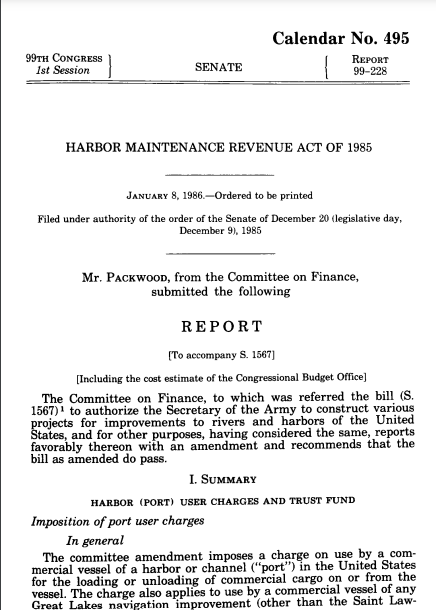
The Harbor Maintenance Fund (HMF) is a federal trust fund established by the United States Congress in 1986. The purpose of the HMF is to provide funding for the operation and maintenance of US coastal and Great Lakes harbors and ports.
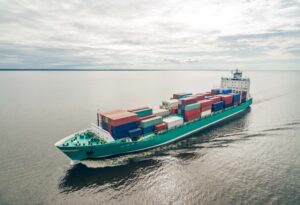
The HMF is funded through a tax on imports and domestic cargo that is shipped through US ports. The tax, known as the Harbor Maintenance Tax (HMT), is assessed at a rate of 0.125% of the value of the cargo being shipped, and is collected by US Customs and Border Protection. This tax is uncapped and can result in hefty cost during the importation of high value vessels and equipment.
The funds collected through the HMT are deposited into the HMF, which is managed by the US Army Corps of Engineers. The HMF is used to pay for a variety of activities related to the operation and maintenance of US ports and harbors, including dredging, maintenance of navigation channels, and repair and maintenance of piers and docks.
Despite being a major source of funding for port and harbor maintenance, the HMF has been criticized by some industry groups for not spending its funds fast enough. In recent years, Congress has attempted to increase the amount of money spent from the HMF each year by passing legislation such as the Water Resources Reform and Development Act of 2014 and the Water Infrastructure Improvements for the Nation Act of 2016.
Overall, the Harbor Maintenance Fund is an important source of funding for the maintenance and operation of US ports and harbors, helping to ensure that these critical infrastructure assets remain safe and accessible for shipping and commerce.